Showing posts with label Localization / स्थानीयकरण. Show all posts

Sunday, October 16, 2011

चाहिए फ़्यूल लोगो पर आपके सुझाव

फ़्यूल लोगो के लिए आपके सुझाव चाहिए...प्रस्तावित छवियाँ उसी वेब पृष्ठ पर हैं

यहाँ पर कुछ प्रस्तावित लोगो देखिए और अपने सुझाव जल्द हमें भेजिए इस पते पर: fuel-discuss AT lists.fedorahosted.org

जैसा कि आपको पता होगा कि फ़्यूल प्रोजेक्ट कंप्यूटिंग क्षेत्र में भाषायी मानकीकरण के लिए काम करने वाली प्रमुख परियोजना है और इसके अंतर्गत पिछले तीन सालों के दौरान कई कार्य किए गए हैं। फ़्यूल प्रोजेक्ट के बारे में अधिक जानकारी के लिए देखिए प्रोजेक्ट का यह वेब पेज

Tuesday, November 23, 2010

फ़ायरफ़ॉक्स 4 के लिए काम चालू - अपना सुझाव भेजें

अनुवाद एक जटिल काम होता है...और मेरा तो मानना है कि अनुवाद के काम में फ़ीडबैक की कुछ अधिक ही जरूरत होती है. फ़ायरफ़ॉक्स का उपयोग काफी होता है और इसे खासकर हिन्दी में काफी डाउनलोड भी किया जाता है. फ़ायरफ़ॉक्स 4 के लिए काम चालू हो गया है. इसलिए जो कोई फ़ायरफ़ॉक्स हिन्दी या मैथिली में उपयोग कर रहे हैं, उनसे अनुरोध है कि वे हमें अपनी प्रतिक्रिया भाषाई समस्या या सुधार के परिप्रेक्ष्य में मुझे भेजें. मैं आपकी प्रतिक्रिया के आधार पर उसे सुधारने की कोशिश करूँगा. स्क्रीनशॉट के साथ अगर संदेश भेजें जिसमें समस्या है और साथ ही सुझाव भी दिए गए हों तो क्या कहने. आप मुझे सीधे ईमेल भी जीमेल के इस आईडी पर कर सकते हैं - rajesh672. यदि कोई तकनीकी समस्या है तो हमें तो भेज सकते हैं लेकिन बेहतर होगा कि वहाँ पर सीधे इस संबंध में बग फ़ाइल करें.

Tuesday, October 14, 2008

Chacha Nehru or Mama Nehru!

The first prime minister of India late Jawahar Lal Nehru was called Chacha Nehru in Hindi. He used to love children so they started calling him Chacha (paternal uncle). But he was called Mama Nehru by the children of Kerela (Malyalam spoken state) as traditionally matriarchal system prevails in Kerela and so mother's brother called Mama (maternal uncle) is having more importance than father's brother. The soft drink Fresca was being promoted by a saleswoman in Mexico. She was surprised that her sales pitch was greeted with laughter, and later embarrassed when she learned that fresca is slang for lesbian. U.S. and British negotiators found themselves at a standstill when the American company proposed that they table particular key points. In the U.S. Tabling a motion means to not discuss it, while the same phrase in Great Britain means to bring it to the table for discussion. He is as wise as owl. An owl represents an wise creature in USA and UK. But in India it is referred as foolish. In Arab countries it is seen as inauspicious.

In India, there is a saying, kosa kosa par pani badle, char kosa par vaani. This means that at every one kosa, (a local measuring unit for distance slightly greater than one mile) quality of water changes and at every four kosa language changes. This saying is not an exaggeration. For example in Bengali
Shadhubhasha, language of sages, is the written language with longer verb inflections and a more Sanskrit-derived vocabulary. Indian national anthem Jana Gana Mana and the national song of India Vande Mataram were composed in a form of Shadhubhasha, but its use is rapidly declining in modern age. Choltibhasha, running language, a written Bengali style that reflects a more colloquial idiom, is increasingly the standard for written Bengali. But if we talk about spoken Bengali , spoken Bengali exhibits far more variation than written Bengali. Ancholik dialect and one or more forms of Grammo Bengali can be found different with the small changes of distance.

Monday, October 13, 2008

Translation : Art plus Craft plus Science

Many newcomers to translation believe it to be an exact science, and mistakenly assume that firmly-defined one-to-one correlations exist between words and phrases in different languages, thus rendering translations fixed and identically-reproducible, much as in cryptography. They assume that all that is needed in order to translate a text is to encode and decode between languages, using a translation dictionary as the codebook.

On the contrary, such a fixed relationship would only exist, were a new language synthesized and continually synchronized with another, existing language in such a way that each word would forever carry exactly the same scope and shades of meaning, with careful attention being given to the preservation of etymological roots and lexical "ecological niches," assuming that these were known with certainty. If the new language were then ever to take on a life of its own apart from such cryptographic use, each word would naturally begin to assume new shades of meaning and cast off previous associations, thereby vitiating any such synthetic synchronization.

There has been debate as to whether translation is an art or a craft. Literary translators, such as Gregory Rabassa in If This Be the reason, argue that translation is an art, though one that it is teachable. Other translators, mostly those who work on technical, business or legal documents, regard their métier as a craft — one that can not only be taught, but that is subject to linguistic analysis and that benefits from academic study.

Most translators will agree that the situation depends on the nature of the text being translated. A simple document, e.g. a product brochure, can often be translated quickly, using techniques familiar to advanced language-students. By contrast, a newspaper editorial, a political speech, or a book on almost any subject will require not only the craft of good language skills and research technique, but a substantial knowledge of the subject matter, a cultural sensitivity, and a mastery of the art of good writing. Translation has, indeed, served as a writing school for many recognized writers.

We cannot say translation is a art only, or craft or science only. In fact translation is the combination of all the three. As far as translation is concern it is not similar to that of fine art like things but if writing any story is creation then translating it is essentially a recreation. Art and craft are complementary to each other and for translating anything a good amount of experience is also needed. The whole process of doing any translation is fully scientific so translation is science also.

Friday, October 10, 2008

FUEL: An initiative in language standardization via collaboration

http://www.linux.com/feature/149038

"FUEL (Frequently Used Entries for Localization) aims to solve the problem of inconsistency and lack of standardization in computer software translation in a new and unique way. Initiated by Red Hat, the project is trying to give a better experience to end users of a localized desktop by resolving the issues of standardization and inconsistency."

"FUEL is an attempt to standardize terms for the whole desktop instead of concentrating on different applications separately. At present, FUEL incorporates representative entries from the GNOME desktop, OpenOffice.org, Firefox browser, Evolution email client, and Pidgin instant messenger, so that it can have at least all the entries that a normal user uses very frequently. Later, on demand from communities, FUEL can incorporate more applications in its list from different projects."

सहभागिता आधारित भाषा मानकीकरण का एक प्रयास

लिनक्स डॉट कॉम पर मेरा आलेख हाल ही में छपा है...मानकीकरण के फ़्यूल प्रोजेक्ट के बारे में यह आलेख विस्तार से सारी स्थितियों के बारे में बताता है कि क्यों इस प्रोजेक्ट को शुरू किया गया है. सहभागी नवाचार पर आधारित इस प्रोजेक्ट के बारे में इस लेख में यह बताने की कोशिश की गई है कि कैसे सहभागिता से हम उन मानकीकरण के लक्ष्यों को हासिल कर सकते हैं जो अब तक कई कारणों से हासिल नहीं किया जा सका है.

Wednesday, September 24, 2008

फ़ॉयरफ़ॉक्स 3 .0. 2 हिंदी बीटा जारी

फ़ॉयरफ़ॉक्स हिंदी बीटा
को रिलीज किया जा चुका है...कृपया जाँचें और बताएँ। हम उन सभी के लिए आभारी हैं जिन्होंने इसकी जाँच में सहयोग किया था और अपनी प्रतिक्रिया पिछले ब्लॉगों पर भेजी थी। यहाँ हम सराय के ट्रांसलेशन रिव्यू वर्कशॉप और उसमें भाग लेने वाले सभी लोगों का जिक्र करना जरूर चाहेंगे जिसकी वजह से यह बेहतर रूप में आ पाया है। इसमें फ्यूल लिस्ट का भी उपयोग किया गया है। शुक्रिया श्री रमण व उनकी टीम का भी जिन्होंने इसमें महत्वपूर्ण सहयोग दिया है।

Friday, August 15, 2008

Translation and the Concept of Register

Basically in modern linguistics, language is analyzed on two basis, on the basis of structure and on the basis of usability. According to the variation of subjects language variation is essential. We can say it domain variation or functional variation. These variation is the variation of domain that is functional variation according to subject matter. On the basis of usability, the special language type which we use is called register. Linguistics have tried to capture these functional variations of the homogeneous code by introducing the concept of register or domain. The notion of register is based on the social fact – what people do with their language. In other words, it is a language variety used in social activity in a defined situation.

On the basis of register only we can differentiate between the functionality of language in different human practice. Basically to understand the speciality the concept of register came in linguistics. When we make differences in same language according to particular subject area then register is created. Due to the use only official Hindi is different from commercial Hindi, commercial Hindi is different from technical Hindi and technical Hindi is different from social Hindi and so on. All area have its own particular words and use. The glossaries and use of language in all areas are different. The identification of this difference is essential. We can see the difference in the following examples.

At the level of words:

Administration Scientific
Grant Force
Registration Velocity
Document Displacement
Confidential Magnetism
Compensation Photosynthesis

Thursday, August 14, 2008

टिंडरबॉक्स से अग्निलूमड़


फ़ायरफ़ॉक्स उर्फ अग्निलूमड़ की जाँच सीधे टिंडरबॉक्स से करें. आप अपना नवीनतम हिन्दी बिल्ड सीधे यहीं से ले सकते हैं...अपने मनपसंद प्लेटफ़ॉर्म के अनुसार. लगातार पकते हुए खाने का अगर आप आनंद लेना चाहते हैं तो टिंडरबॉक्स पन्ने पर जाएँ. यदि नाइटली बिल्ड चाहिए तो यहाँ से लीजिए. इस सबके साथ मोज़िला डैशबोर्ड पर अपनी भाषा को दूसरी भाषा के साथ देखें. कुछ दिक्कत हो तो हमें खबर देना न भूलें. हाँ...अगर सबकुछ 'कुशल' रहा तो यह अधिकृत अनुवाद में शामिल होगा :-)...
लेकिन अभी 15-20 दिन शेष हैं.

अंत में आप सबका बहुत बहुत शुक्रिया...रवि रतलामी, देबाशीष, जय, शैलेश भारतवासी, आलोक, अनुनाद सिंह, संजय बेंगाणी, प्रतिभा जैसे तमाम लोगों का...! कुछ और कारसेवकों का इंतजार है...

Monday, August 11, 2008

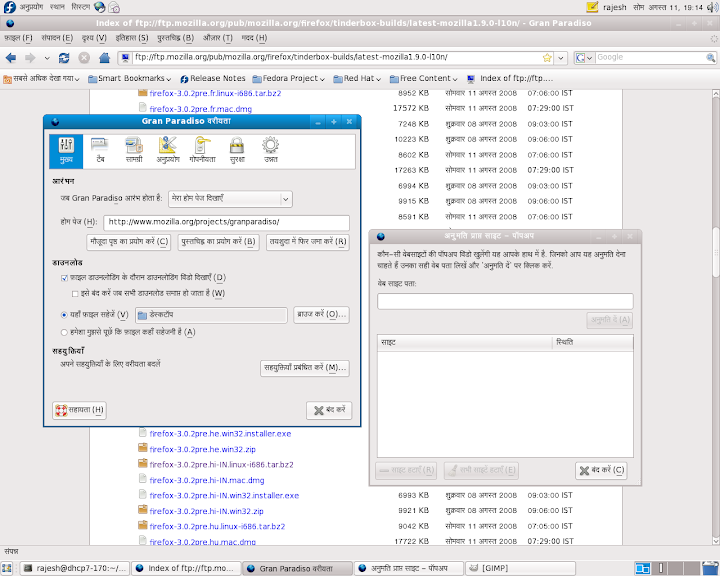
Test Firefox3.0.2 Hindi

Firefox 3.x Hindi is in the process of release and its builds from different platforms are ready to test. Please test it by downloading from here... Its fresh and incorporating some changes that I got on the comment of my earler post. I am unable to do some of the changes as it will violate Fuel Hindi I am sorry for this but anybody thinks it wrong or want it to improve they can create an issue there at Fuel page.

Firefox 3.0.2 Hindi is available for linux, mac, and windows platform. So please try to test it for more platform if you have with you. I got several report at my earlier post and I am thankful to all.

Thursday, August 7, 2008

फ़ायरफ़ॉक्स 3.0.2 हिन्दी टेस्ट के लिए तैयार

फ़ायरफ़ॉक्स 3.0.2 हिन्दी टेस्ट के लिए तैयार है...इसलिए जल्दबाजी में फ़ायरफ़ॉक्स हिन्दी को जाँचें, परखें, और हमें बताएँ ताकि अगर कुछ अब संभव हो सकता है तो हम आपके लिए फेरबदल कर सकें. यहाँ से डाउनलोड कीजिए. लिनक्स, मैक व विंडोज़ तीनों में आप इसे देख सकते हैं.

Friday, July 25, 2008

फ़्यूल - फ़ोटोवायस

रवि भाई भी बता चुके हैं कि फ़यूल किस बला का नाम है...अब उसकी कुछ और फ़ोटो शोटो देखिए...

मानकीकरण के इस प्रयास को और भाषाओं के लिए भी शुरू करने की योजना है...फ़्यूल हिन्दी जारी किए जाने से आप परिचित तो हैं हीं...

Tuesday, July 22, 2008

Fuel : Means and End

After the public release of Fuel first language Hindi, lots of questions arises and need answers. I believe that these questions will certainly be valuable in giving Fuel a better shape and size. Some of the major aspects I tried to explain here...

1. Fuel is a Collaborative, Open and Transparent way to achieve standardization
Inclusiveness and participation are the backbone of Fuel process. It provides public review process in creating terms. It is having a version control system, bug tracker and ticketing system and a public mailing list through which anybody can take part in discussion about it. With the help of collaborative and open process Fuel is able to generate quality localized content.

2. Fuel should not be confused with a simple glossary
Though Fuel's 'end' is to come with a 'standardized' 'glossary' but the 'means' through this is evolving is entirely different. Here, as we shown for Hindi language, we are coming with a glossary by public evaluation by all the active communities, not only from Firefox or OpenOffice or Gnome or Kde localizers..., but all groups sat together at one place and discussed issues and finally decided that from now onwards we will use these 'standardized' entries only for the desktop translation these entries. Fuel is based on the consensus of active communities. So here comes the end of inconsistency!

3. Fuel considers whole desktop in totality
FUEL will be an attempt to put effort of standardization for desktop as a whole, desktop in totality instead of concentrating on different applications one by one. This approach has several benefit over others. One major benefit is that its usability is much more than others who take different applications individually. Also, for creating manuals it's benefit is big. It has nothing to do with the quantity of translation, it concentrates on giving consistently highly quality content.

4. Fuel is/can be the main catalyst, main fuel, main motivator behind a language having no terminology. If any language is not having terminology than Fuel is able to give a quick idea about the major entries that s/he is going to translate for her/his language. I, personally, think that language having no terminology should first concentrate on making at least primary level glossary. It is also making the review process easier. At present just 578 entries to start with!

Tuesday, July 15, 2008

फ़्यूल हिन्दी 12 जुलाई को जारी

फ़्यूल परियोजना की ओर से हिन्दी कंप्यूटर की बारंबार प्रयोग में आनेवाली प्रविष्टियों के एक मानक रूप की तलाश शायद समाप्त हुई लगती है. हिन्दी कंप्यूटर के मानकीकरण के प्रयास में परंपरागत प्रयासों से कुछ अलग हटकर फ़्यूल के प्रयास को एक बड़ी सफलता मिली है. व्यापक सामुदायिक मूल्यांकन के बाद फ़्यूल हिन्दी को गत रविवार को जारी किया गया है. कई अनुवादकों, भाषा के जानकार लोगों और स्थानीयकरण तकनीक से जुड़े धुंरधरों ने मिलकर फ़्यूल हिन्दी का मूल्यांकन कर उसे सार्वजनिक रूप से जारी किया. आप फ़्यूल हिन्दी के बारे में विस्तार से यहाँ पढ़ सकते हैं.

फ़्यूल की सबसे बड़ी ख़ासियत यह है कि यहाँ शब्द पर निर्णय खुले व साझेदारी से लिए जाते हैं. फिर इस परियोजना में आपको सूची के संबंध में अपनी शिकायत को दर्ज़ करने की भी सुविधा है. किसी दूसरे सॉफ़्टवेयर विकास की प्रक्रियाओं की तरह यहाँ भी सारी सुविधाएँ हैं और कोई भी व्यक्ति इससे जुड़ सकता है. सबसे महत्वपूर्ण रूप से, यहाँ पर एक पूरे डेस्कटॉप की समग्रता में देखने के कोशिश की गई है बजाए अलग अलग अनुप्रयोग के. यह निश्चित रूप से डेस्कटॉप स्थानीयकरण के मानकीकरण की ओर जाने में मदद करेगा. साथ ही वैसे लोगों की सुविधा के लिए मूल्यांकन किए गए फाइल को दूसरे रूप में भी रखा गया है जो पीओ प्रारूप से परिचित नहीं हैं. इसके अलावे वर्शन कंट्रोल सिस्टम व एक डाक सूची भी है.

दो दिनों तक लोगों ने मिल-बैठकर तय किया है कि भविष्य में इन प्रविष्टियों का स्वरूप स्थिर रखने की कोशिश की जाएगी...लेकिन माँग और आवश्यकता पड़ने पर हम तब्दीली भी जरूर करेंगे. साथ ही अनुप्रयोगों के नए संस्करणों के परिवर्तन को समाहित करने के लिए हम आवधिक रूप से इसे नए रूप में जारी करेंगे. लेकिन यह तो बाद की बात है...पहले हिन्दी फ़्यूल सूची pdf, ods या po में से किसी रूप में डाउनलोड कीजिए और अपने सुझाव इस फ़्यूल डाक सूची में शामिल होकर भेजिए.

Fuel because...

Fuel (Frequently Used Entries for Localization) because... there are lot of problem users are facing when using softwares localized in their own languages. And so they, fade up with the 'quality' of translation, are commenting regularly on the 'translators'. On the other hand translators think it nothing more than a 'thankless' job. Actually all major desktop related entries appearing on menus and sub-menus are not more than five-six hunderd. So if we move to standardize a mere 500-600 entries and the process is backed by the active localizers and entities who get benefit from localization then we can make a successful move against the problem of standardization and inconsistency in software translation. This is the main idea behind FUEL.

Generally lots of similar words are used for different applications with almost all having same context...like File, Edit, View, Save, Save as...!! Collecting all these words from different applications and putting it together can help much. Choosing entries from menus and sub-menus appearing on a desktop, its panel, browser, office suits, editor, email client, messanger and terminal and by concentrating on these entries only, we can get an amazing result instantly. But its only a start. No doubt, for software localization these five-six hundred entries are most vital and we can give a face-wash and make our destop 'fresh' from a 'tired' look. So these are the entries that are frequently used for localization and so I like to call it 'Fuel' ie. 'frequentlu used entries for localization'.

The effort of FUEL is unique. It is a set of steps any content generating people involved in creating localized content can undertake and with the help of this we can ensure consistently highly quality. Including this FUEL is having a version control system allowing evolution of terms, a bug tracker and ticketing system and a mailing list also. Collaborative innovation is a most important aspect. In the process finally it is able to allow inclusiveness and participation with openness and transparency.

The history of standardization contains lot of major names and contributors inside it. But these standardization efforts were generally automated. Generally after the long process and labour glossaries with several thousands of entries were made available to the public. But nothing changed! This doesn't mean that FUEL undermines the importance of previous works. But here in FUEL, effort will be more on collaboration and openness so as like earlier standardization efforts it not only comes as an addition to the existing chaos and making the standardization process finally more complex. The individual FUEL effort for different languages will generally start with smaller number of entries. Apart from these features it also provides public review process in creating terms. During the process of standardization, FUEL will be an attempt to put effort of standardization for desktop as a whole, desktop in totallity instead of concentrating on different applications one by one. So currentely we have incorporated entries from gnome desktop (gdm, panel, gnome-menu etc), gedit (editor) openoffice (office suit), firefox (Browser), evolution (Email Client), and pidgin (instant messanger) so that we can have all the entires that a normal user uses frequentely. By this way we tried to use representative entries from major application. If a people is changing the platform s/he will see similar or almost similar entries.

So, FUEL (Frequently Used Entries for Localization) aims at solving the Problem of Inconsistency and Lack of standardization in Computer Software Translation across the platform for all Indic Languages. It will try to provide a standardized and consistent look of computer for a language computer users.

Friday, April 11, 2008

पिज़िन क्या है

आजकल सामान्य पाठ आधारित बात-चीत के लिए ऑनलाइन मैसेंजर काफी लोकप्रिय है. पिज़िन एक मल्टी प्रोटोकॉल इस्टैंट मैसेजिंग क्लाइंट है जो आपको अपने सारे इस्टैंट मैसेंजर को एक साथ एक ही समय में प्रयोग करने में सक्षम बनाता है. इसी पिज़िन को गैम नाम से भी जाना जाता रहा है परंतु कुछ कानूनी कारणों से उस नाम का उपयोग बंद हो गया है और अब उस पुराने गैम को अब पिज़िन के नाम से जाना जाता है.

पिज़िन निम्नलिखित के लिए काम करता है: AIM, Bonjour, Gadu-Gadu, Google Talk, Groupwise, ICQ, IRC, MSN, MySpaceIM QQ, SILC, SIMPLE, Sametime, XMPP, Yahoo! और Zephyr.

इस पिज़िन को लोकलाइज करने के लिए पिज़िन के डेवलेपर अनुवाद इच्छुक समुदाय का समर्थन करती है. यदि आप अपने लोकेल में इसे अनुवाद करना चाहते हैं तो सबसे पहले इस कड़ी पर देखिए इसपर पहले से तो काम नहीं हो रहा है जैसा आप किसी भी दूसरे ओपन सोर्स प्रोजेक्ट के लिए किया जाता है. फिर यदि सक्रिय रूप से काम हो रहा है या नहीं हो रहा है दोनों स्थितियों में आप पिज़िन के अनुवादक की सूची पर मेल कर सकते हैं. सूची का आईडी है translators@pidgin.im और सदस्यता आप यहां से ले सकते हैं.

यदि आपकी भाषा के लिए अबतक काम चालू नहीं हुआ है तो फिर भी आपको इसी सूची पर लिखना है कि किसी ने अबतक कोई काम शुरू तो नहीं किया है तो भी आपको इसी सूची पर मेल भेजना है. फिर अनुवाद सौंपने के लिए एक इस्यू बनाइए और अनुवाद सुपुर्द कीजिए.

जरूरी कड़ियां व संदर्भ :

पिज़िन डेवलेपर
अनुवादक के लिए सुझाव
पिज़िन अनुवादक मेलिंग लिस्ट
फाइल सौंपने के लिए इस्यू

Wednesday, April 9, 2008

तो हिन्दी कंप्यूटर का कोई भविष्य नहीं है

भी-अभी हमारे अजीज मित्र ने यही सवाल दुहराया तो मेरे मुंह से निकल ही गया, कौन कहता है कि हिन्दी कंप्यूटर का कोई भविष्य नहीं है, कौन कहता है लोकलाइजेशन का कोई भविष्य नहीं है. मेरे वो मित्र भी कंप्यूटर स्थानीयकरण (लोकलाइजेशन) के काम से पिछले कई वर्षों से जुड़े हैं और भाषा और उनसे जुड़े सवाल को लेकर काफी परेशान रहते हैं. लोग बार-बार इन कोशिशों पर सवाल उठाते हैं लेकिन यदि यह गैर-जरूरी है तो फिर बहुत सारे सवाल उठने लगते हैं.

पहला सवाल तो यह उठता है कि यदि स्थानीयकरण का कोई भविष्य नहीं है तो फिर बड़ी कंपनियां इस रास्ते की ओर क्यों बढ़ती हैं?! यह एक ही साथ प्रश्न व विस्मय दोनों पैदा करता है. खासकर बड़ी मालिकाना स्वभाव की कंपनियों के लिए जहां लाभ ही पहली व आखिरी ख्वाहिश है, जहां हर कदम के लिए सर्वेक्षण कराए जाते हैं वह फिर इस ओर क्यों आ रही हैं. अब देखिए, याहू, एमएसएन, एओएल जैसी इंटरनेट की कई बड़ी कंपनियों ने हिन्दी सहित कई भाषाओं की ओर रूख किया है. छोड़िए कंपनियों की बात, यदि इसका भविष्य नहीं है तो फिर किसी हिन्दी डेस्कटॉप को देखकर आपके-हमारे मन खुश क्यों हो जाता है क्यों हम अपनी जिज्ञासा को दबा नहीं पाते हैं और जाकर देखते हैं कि देखूं तो कैसा दिखता है हमारा हिन्दी का डेस्कटॉप. जब अंग्रेजी जानने वाले आप जैसे लोगों का मन हिन्दी को देखकर गुदगुदाने लगता है तो फिर उनके लिए सोचिए जिन्हें ए बी सी भी नहीं आता है ;-).

कोई भी तकनीक कैसे फैलती है यह बड़े शोध का विषय है और इस पर बड़े काम भी हुए हैं. अब देखिए, जहां तक हिन्दी डेस्कटॉप की बात है तो यह कंप्यूटर अभी भी ज्यादातर उन्हीं लोगों के बीच घूम रही है जो अंग्रेजी भी जानते हैं. फर्ज कीजिए कि अंग्रेजी न जानने वाला इसे उपयोग में लाना तो फिर वह क्या करेगा. उसे तो कुंजी के A, B, C भी अनजाने लगेंगे. बीसेक साल पहले के टेलिविजन को देखें ...बेवाच की सुंदरियों का स्थान एकता कपूर की सोप-ओपेराओं ने ले लिया. उस समय के समाचार चैनल को भी याद करें...यहां तक कि दस साल पहले के समाचार चैनलों की तो आप आसानी से डेस्कटॉप व इंटरनेट पर हिन्दी की स्थिति से बहुत दुखी न होंगे. भारत के दस सबसे अखबारों में अंग्रेजी का एक ही अखबार आता है. फर्ज कीजिए यूनीकोड समर्थित फॉन्ट ही सिर्फ लोग उपयोग में लाना शुरू कर दें तो फिर कितनी हिन्दी की सामग्रियां जमा हो जाएंगी. ऐसा होना सिर्फ फर्ज करने की बात नहीं है, यह बस कुछेक सालों के अंदर होना ही है.

सच कहें तो हम अभी आधे-अधूरे स्थानीयकरण के दौर से गुजर रहे हैं और खासकर पिछले तीन-चार वर्षों की ही तरक्की इसकी विरासत है. स्थानीयकरण का अर्थ सही रूप से सिर्फ भाषा अनुवाद ही नहीं कर देना है बल्कि स्थानीयकरण कई स्तरों पर किए जाने की जरूरत है जैसे स्थानीय अंतर्वस्तु, रीति-रिवाज, संकेत प्रणाली, सॉर्टिंग, सांस्कृतिक मूल्यों व संदर्भों के साथ सौंदर्यानुभूति की दृष्टि से स्थानीयकरण की जरूरत है और धीरे-धीरे जरूर उस ओर भी बढ़ा जाएगा. और फिर दुनिया हमारी हिन्दी की होगी. मुझे तो लगता है कि यही बाजार और उदारीकरण व भूमंडलीकरण की नीतियां जो फिलहाल हमें दुखी कर रही हैं हमें और हमारी भाषा को आगे बढ़ाने में सबसे कारगर होंगी.

Tuesday, April 8, 2008

ओपनऑफिस : परिचय व लोकलाइजेशन प्रक्रिया

ओपनऑफिस कार्यालय में उपयोग में आने वाले अनुप्रयोगों का समूह है जिसका श्रोत कोड भी स्वतंत्र रूप से उपलब्ध है. ओपनऑफिस को OpenOffice.org या OOo के रूप में भी जाना जाता है. इसकी सबसे बड़ी खासियत यह है कि ओपनडाक्यूमेंट मानक को आंकड़ा विनिमय के लिए प्रयोग करने के साथ ही साथ यह माइक्रोसॉफ्ट ऑफिस के कई संस्करणों के साथ बहुतेरे दूसरे प्लेटफॉर्म पर उपयोग किया जाता है. यह मुख्यतया माइक्रोसॉफ्ट विंडोज, लिनक्स, सोलारिस, बीएसडी, ओपनवीएमएस, OS/2, और IRIX पर समर्थित है.

ओपनऑफिस स्टारऑफिस (http://www.sun.com/software/star/staroffice/index.jsp) पर आधारित है जिसे बाद में सन माइक्रोसिस्टम (http://sun.com) के द्वारा अगस्त 1999 में अधिगृहीत कर लिया गया. ओपनऑफिस एक मुक्त सॉफ्टवेयर है जो जीएनयू लेसर जनरल पब्लिक लाइसेंस के अधीन उपलब्ध किया गया है. हालांकि इसे ओपनऑफिस के रूप में ज्यादा लोकप्रिय रूप से जाना जाता है लेकिन यह ट्रेडमार्क किसी दूसरे के नाम से पंजीकृत है इसलिए इसका औपचारिक नाम Openoffice.org रखना वैधानिक जरूरत हो गई. इसका वेब साइट विधिवत तौर पर अक्टूबर 2000 में शुरू हुआ था. माइक्रोसॉफ्ट ऑफिस सूट के बनिस्पत एक समस्या यहां है कि इस ऑफिस सूट में प्रोसेसिंग समय व स्मृति की अधिक खपत होती है.

ओपनऑफिस के कई घटक हैं. राइटर (Writer) माइक्रोसॉफ्ट वर्ड के तरह का वर्ड प्रोसेसर है जिसमें PDF प्रारूप में पृष्ठ को प्राप्त करने की सुविधा बिना किसी अतिरिक्त साफ्टवेयर को लगाने से प्राप्त हो जाती है. साथ ही वेब पेज संपादन की सुविधा यहां है. कैल्क (Calc) माइक्रोसॉफ्ट एक्सेल के समान गुणों वाला है. इसे भी PDF फाइल में सीधे पाया जा सकता है. इम्प्रेस (Impress) प्रस्तुतिकरण प्रोग्राम है जो माइक्रोसॉफ्ट पावर प्वाइंट के समान है. अपने अन्य साथी की तरह यहां भी सीधे PDF प्राप्त किया जा सकता है. बेस (Base) डाटाबेस प्रोग्राम है जो माइक्रोसॉफ्ट एक्सेस के समान है. बेस को विभिन्न डाटाबेस के लिए फ्रंटएंड के रूप में प्रयोग किया जा सकता है. ड्रॉ (Draw) वेक्टर ग्राफिक्स एडीटर है जो कोरलड्रॉ के शुरूआती संस्करण के तरह काम करता है. यह माइक्रोसॉफ्ट पब्लिशर की तरह है. माइक्रोसॉफ्ट इक्वेशन एडीटर की तरह गणितीय सूत्रों के निर्माण व संपादन का काम मैथ (Math) करता है.

ओपनऑफिस का विकास सीवीएस के प्रयोग से होता है. सीवीएस फाइल को ट्री संरचना में संगठित करता है. इसके अनुवाद की प्रक्रिया हालांकि गनोम से भिन्न है परंतु आसान है जिसे सीखा जा सकता है. अनुवाद किसी भी संपादक पर किया जा सकता है लेकिन यह जरूरी है कि आरंभ करने के सबसे पहले यह जानना होता है कि किस संस्करण को अनुवाद किया जाना है. इसके लिए सबसे पहले dev@l10n.openoffice.org मेलिंग लिस्ट पर निश्चित कर लें कि कौन सा संस्करण चल रहा है. लेकिन यदि कोई बड़ा रिलीज हाल में होने जा रहा हो तो सबसे अच्छा हो कि आप इसी संस्करण पर काम करें. फिर जरूरत होती है फाइलों की जिसे आपको अनूदित करना है. इसे इस लिंक से लीजिए:

ftp://ftp.linux.cz/pub/localization/OpenOffice.org/devel/

यहां आप ओपनऑफिस की हर सक्रिय शाखाओं के लिए फोल्डर पाएंगे. किसी भी डायरेक्ट्री में आप दो तरह की फाइलें पाएंगे एक तो POT फाइल और दूसरी en-US.sdf फाइल. जिस शाखा के लिए आप काम करना चाहते हैं उस शाखा की आप दोनों फाइलें डाउनलोड कर लें जिसमें en-US.sdf फाइल की जरूरत आपको अनुवाद का काम खत्म करने के बाद ओपनऑफिस प्रारूप में फाइलों को बदलने में होगी.

फिर क्या है केबैबल (KBabel) या पीओएडिट (POedit) पर अनुवाद के काम में जुट जाइए. चूँकि मदद फाइलों को छोड़कर भी फाइलें काफी बड़ी हैं इसलिए लंबा समय लेता है. यह काम चूंकि महत्वपूर्ण व बड़ा है इसलिए पहले से ही शब्दावली तय कर ली जाए तो अच्छा हो.

फिर ट्रांसेलेशन टूलकिट (Translate Toolkit) को अपने कंप्यूटर में स्थापित करें जिसका उपयोग अनूदित फाइलों को ओपनऑफिस प्रारूप में बदलने में होगा. इस सबसे पहले फाइल की बैकअप कॉपी ले लें. फाइल को जांच लें कि फाइल हर तरह से सही है कि नहीं यानी उसमें टैग आदि सही ढ़ंग से हैं या नहीं. फिर फाइल को ओपनऑफिस प्रारूप में बदलने के लिए ट्रांशलेशन टूलकिट की मदद लें और po2oo औजार की मदद से अपनी फाइल को ओपनऑफिस प्रारूप में बदलें. यहां आपको en-US.sdf फाइल की जरूरत पड़ेगी जिसके पाथ को आपको इसमें बदलने के दौरान देना पड़ेगा. आपको कमांड के साथ लोकेल नाम भी देना होगा. उदाहरण लीजिए..

po2oo -i -t en-US.sdf -o -l

हिन्दी के लिए यह कमांड oo-2.0-hi-GSI.sdf आउटपुट फाइल देगी. फिर उसके बाद अपनी भाषा के लिए लोकलाइजेशन प्रोजेक्ट (L10n) के अंदर एक इस्यू बनाकर फाइल सुपुर्द करें. एक इस्यू का उदाहरण देखें:
http://www.openoffice.org/issues/show_bug.cgi?id=68062


मेलिंग लिस्ट:

पहले आप openoffice.org पर अपना खाता बनाएँ और फिर नीचे की सूची से मेलिंग लिस्ट चुनें:

http://native-lang.openoffice.org/servlets/ProjectMailingListList
http://l10n.openoffice.org/servlets/ProjectMailingListList

ऊपर के दोनों प्रोजेक्ट देशीय भाषाओं में ओपन ऑफिस को लाने के काम से जुड़ी है. हिन्दी में पहले से काम चल रहा है और फिलहाल http://hi.openoffice.org टीम इस काम जिम्मा लिया हुआ है. इससे जुड़े पिछले काम के लिए इस इस्यू को देखिए, यहां से आप अनुवाद की हुई फाइलें भी ले सकते हैं:

http://www.openoffice.org/issues/show_bug.cgi?id=68062

जरूरी लिंक व संदर्भ:

http://en.wikipedia.org/wiki/OpenOffice.org
ftp://ftp.linux.cz/pub/localization/OpenOffice.org/devel/POT/
http://oootranslation.services.openoffice.org/pub/OpenOffice.org/
http://l10n.openoffice.org/
http://www.khmeros.info/tools/localization_tips.html
http://www.khmeros.info/tools/oo2.0_program_translaltion.html
http://qa.openoffice.org/localized/index.html
http://qatrack.services.openoffice.org/view.php
http://wiki.services.openoffice.org/wiki/OOoRelease30
http://wiki.services.openoffice.org/wiki/NLC:ReleaseChecklist
http://l10n.openoffice.org/L10N_Framework/ooo20/localization_of_openoffice_2.0.html
http://www.microsoft.com/globaldev/reference/lcid-all.mspx
http://www.openoffice.org/issues/show_bug.cgi?id=68062

Friday, April 4, 2008

कंप्यूटर का मैथिलीकरण

मैथिली उन 22 भाषाओं में से है जिसे संविधान की 8 वीं अनुसूची में शामिल होने का सौभाग्य मिला हुआ है. लेकिन फिर सरकार की ओर से संविधान में शामिल सभी भाषाओं के लिए भाषा कंप्यूटर के प्रयासों को छोड़ दें तो ऐसा कोई प्रयास बड़ी कंपनियाँ करती नहीं दिखाई दे रहीं हैं जिससे ऐसी भाषाओं में भी कंप्यूटर जाए जिनकी संख्या कम है या जो इन कंपनियों के लिए बड़े बाज़ार का इंतजाम नहीं कर सकती हैं. लेकिन ओपन सोर्स की दुनिया इसके लिए खुली है और वहाँ काम चालू हो गया है और आशा है कि फेडोरा 10 के आते आते हम मैथिली में भरे पूरे ऑपरेटिंग सिस्टम के साथ जाएंगे जहां डीवीडी को इंस्टॉल करने के लिए ड्राइव डालने के बाद से सारे जरूरी अनुप्रयोगों तक आप सबकुछ मैथिली में पाएंगे.

मैथिली से जुड़े समुदाय मैथिली कंप्यूटिंग रिसर्च सेंटर ने फेडोरा ऑपरेटिंग सिस्टम के लिए काम चालू कर दिया है और इसका इंस्टालर एनाकोंडा के साथ कई जरूरी फ़ाइलों को समुदाय ने अनुवाद भी कर लिया है. फेडोरा मैथिली का काम हालांकि एक बड़ा काम है और इसके लिए बड़े समुदाय की जरूरत भी है. यह जरूरत कई स्तरों पर रहती हैं अनुवाद से लेकर शब्दावली निर्माण व गुणवत्ता को बेहतर बनाने के कई कामों से जुड़ी. जाहिर है कि फेडोरा का तयशुदा डेस्कटॉप वातावरण चूँकि गनोम है इसलिए हमने गनोम को चुना है. इसमें कोई शक नहीं कि अगले चरण में हम केडीई के काम को भी हाथ में लेने की कोशिश करेंगे. मैथिली गनोम के काम से यही मुख्य समुदाय जुड़ी है और आशा रखती है कि गनोम 2.24 संस्करण के सभी जरूरी अनुप्रयोगों को लोकलाइज कर लिया जाए. इसके लिए शुरूआती स्तर के काम जैसे लोकेल निर्धारण और काम करने वाली टीम के पंजीयन का काम पूरा कर लिया है.

इसमें कोई शक नहीं कि मैथिली का एक भरा-पूरा विरासत रखती है. इसमें लिखित साहित्य भी बड़ी मात्रा में है. इस भाषा ने कई जाने माने लेखकों व कवियों को जन्म दिया है. साहित्य अकादमी ने इस भाषा को बहुत पहले से दर्जा दे रखा था लेकिन संविधान की 8 वीं अनुसूची में यह चार वर्ष पहले ही शामिल हुई है. फिर भी इस भाषा को चाहने वाले बहुत लोग हैं. इसलिए मुझे लगता है कि यह आशा करने में कोई गुनाह नहीं है कि हम जल्द ही अपनी इस समृद्ध भाषा में भी कंप्यूटर देख पाएंगे.

मुझे रविकांतजी की वो बात सराय वर्कशॉप के दौरान बहुत अच्छी लगी थी कि लिनक्स का भविष्य कम लोगों द्वारा बोली जाने वाली भाषाओं के साथ ज्यादा है क्योंकि प्रोपराइटरी कंपनियां सिर्फ बाजार के इशारे पर काम करती हैं और वह इन भाषाओं को अपनाने के पहले अपने नफे-नुकसान के बारे में ज्यादा सोचेगी. हाल ही में मेरे मित्र जय पांड्या ने बताया है कि वे अपने साथियों के साथ मारवाड़ी में कंप्यूटर तैयार करने के लिए सोच रहे हैं और जल्द ही इसके लिए काम शुरू करेंगे. सचमुच, ओपन सोर्स की दुनिया में कंप्यूटर को अपनी भाषा में करने के लिए कुछ भाषा को चाहने वाले लोग चाहिए जो अपना कुछ समय दे सकें.

Wednesday, April 2, 2008

Translate or Die!

According to the Bible, there was a time when all those on earth spoke one language. And humanity, united by one language, started building the Tower of Babel to reach the heavens and discover the ultimate truth. As this was open defiance against God's wishes, He thought that the best way to stop these efforts would be to create confusion between humans by making everybody speak different languages so that no one could understand each other. Soon, humans could no longer communicate with each other and the work halted. The Biblical myth ends with the tower being left unfinished, and mankind's dream of reaching the heavens effectively thwarted. "The confusion of tongues" created by a Biblical God has been preventing knowledge decentralization even today.

And that very confusion can also become a barrier in the process of actual penetration of IT, as more than 80 per cent of the population of the world speaks a language other than English. Today open source world are eroding the layers of the "confusion of tongue" by helping to create desktops in the languages people can understand. With more and more computer users shifting towards Linux, the demand for localized interfaces has gone up for non-English speaking users. The power of IT is coming to people in their own language. It is very exciting, but not a simple task at all. And of course translators are the main driving force that is making the globe a real global village. Basically information highway is now highway because of the effort of translators. Therefore, it is generally told that the whole civilization is the borrower of translator for its own existence. We can say that it was not entirely possible to see the today's world as it is in present condition without the translators efforts.


After the process of economic globalization translation is playing more vital role. In 1985, Paul Angel wrote in a collection named Writing from the world II that when the world is continuously contracting like a ripe orange and all the population of different culture are coming closer then on this new earth, the deciding statement for the remaining year will be as simple and straight forward like this: Either translate or die! The process of economic globalization has opened stream of opportunities for the translator and language related persons. So come forward to become the conductor of the process of economic liberalization and globalisation.

The example of oldest translation is on Rosetta Stone which belongs to 2nd century BC. Some of the earlier major work of translation happened to translate the religious books only. In ancient Greeks there were two type of theory for the translation of Bible, one was Philological theory of translation and second was Inspirational theory of translation. While in first type a translator should be aware of both the source language and target language, second type stressed on that this type of 'good' work couldn't be possible without the inspiration of the God. Here, in the world of open source a person with the combination of both the said type is necessary. Inspiration is also necessary here apart from having knowledge of both the source and target languages, a inspiration to work for the open world of open source which is all good and democratic for the masses in broader sense giving masses the power of ownership. So be inspired! And start working to bring the world closer. Let us start translation. But be cautious! We have very big responsibility, responsibility of giving power of IT to the masses! So before starting translation, please just wait for some more posts on issue of translation...